
Competitions are a tool
Tournaments teach how to handle fear, lose with dignity and win without arrogance. They are not the goal.
How teaching works at the club: our principles, the meaning of the word WuDe, safety in training and our students' results.
WuDe Spordiklubi was founded in Tallinn in 2018 and is part of PWTF (Practical Wing Tchun Federation).
Tournaments teach how to handle fear, lose with dignity and win without arrogance. They are not the goal.
We praise the work, not just natural talent. Consistent effort pays off sooner or later — and that is where we focus the child's attention.
A good instructor spots potential before the student believes in it, and gives honest praise rather than blanket praise.
Winning by the rules matters more than winning at any cost. Tactical cunning against an opponent is part of skill and intelligence. Deceiving the referee or breaking the rules is not acceptable.
We compare a child to themselves a month ago — that is why the club has a rating system.
There is no growth without mistakes. The gym is a safe place to try, ask questions and ask for help.
Courage is stepping out while afraid.
Lasting discipline comes from understanding purpose, not fear of punishment. Atmosphere and respect beat harshness.
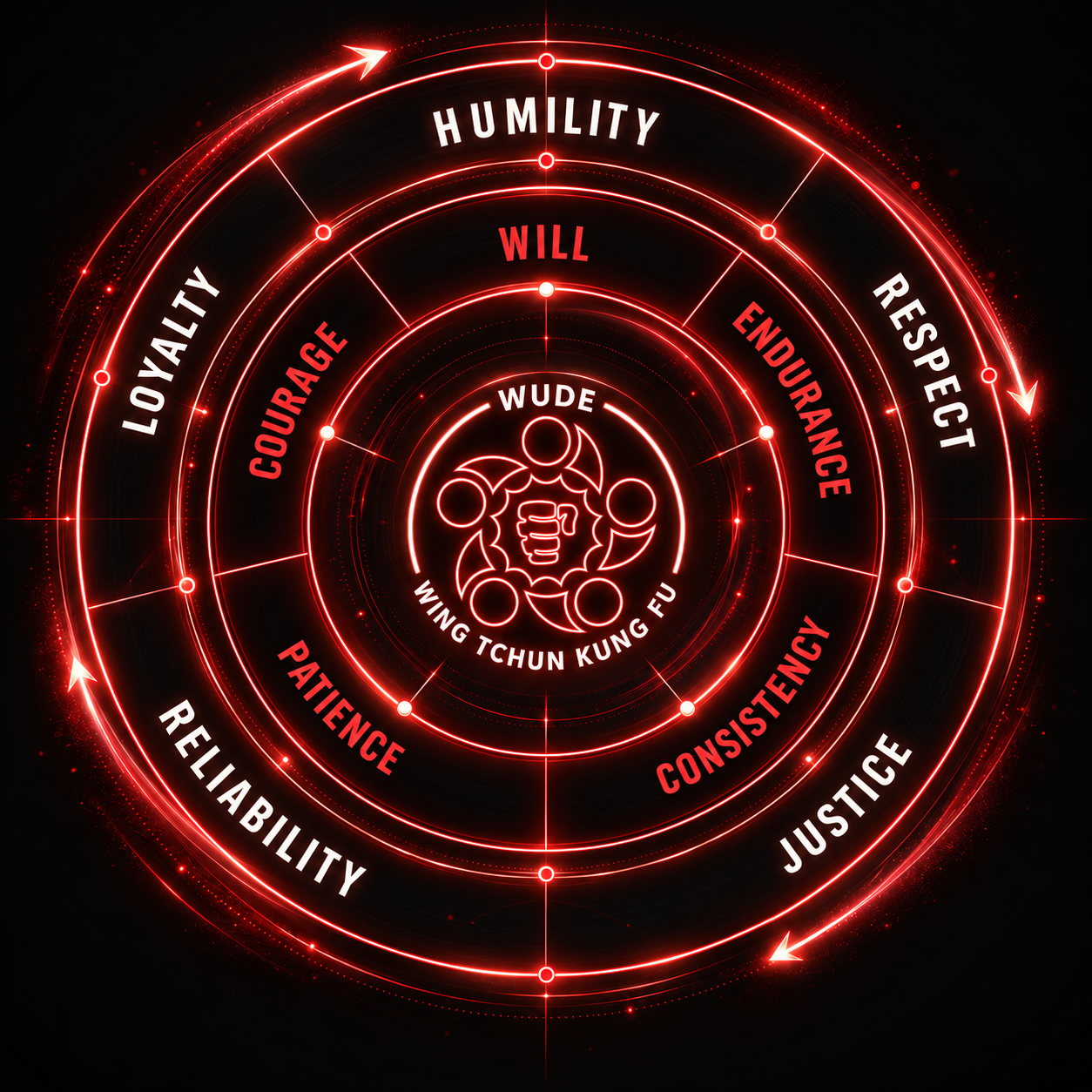
“WuDe” in Chinese means “martial virtue” or “martial morality”.
The WuDe martial arts club has been running since 2018 and belongs to PWTF (Practical Wing Tchun Federation). The organisation's aim is to support the physical and mental development of students through the Wing Tchun fighting style.
In Chinese, “WuDe” means “martial virtue” or “martial morality”. The concept of WuDe is deeply rooted in traditional Chinese martial arts and reflects their inherent ethical principles.
In martial arts philosophy, WuDe goes beyond physical skills and fighting techniques — it emphasises the development of moral character, discipline and a sense of responsibility. Practitioners are expected to follow ethical values such as respect, humility, honesty and self-discipline, both inside the training environment and beyond it.
It is customary to distinguish 5 qualities of the fighter's mind or spirit and 5 qualities of action. The moral qualities of the mind are: Will, Endurance, Perseverance, Patience and Courage. The moral qualities of action are: Humility, Respect, Justice, Trustworthiness and Loyalty.
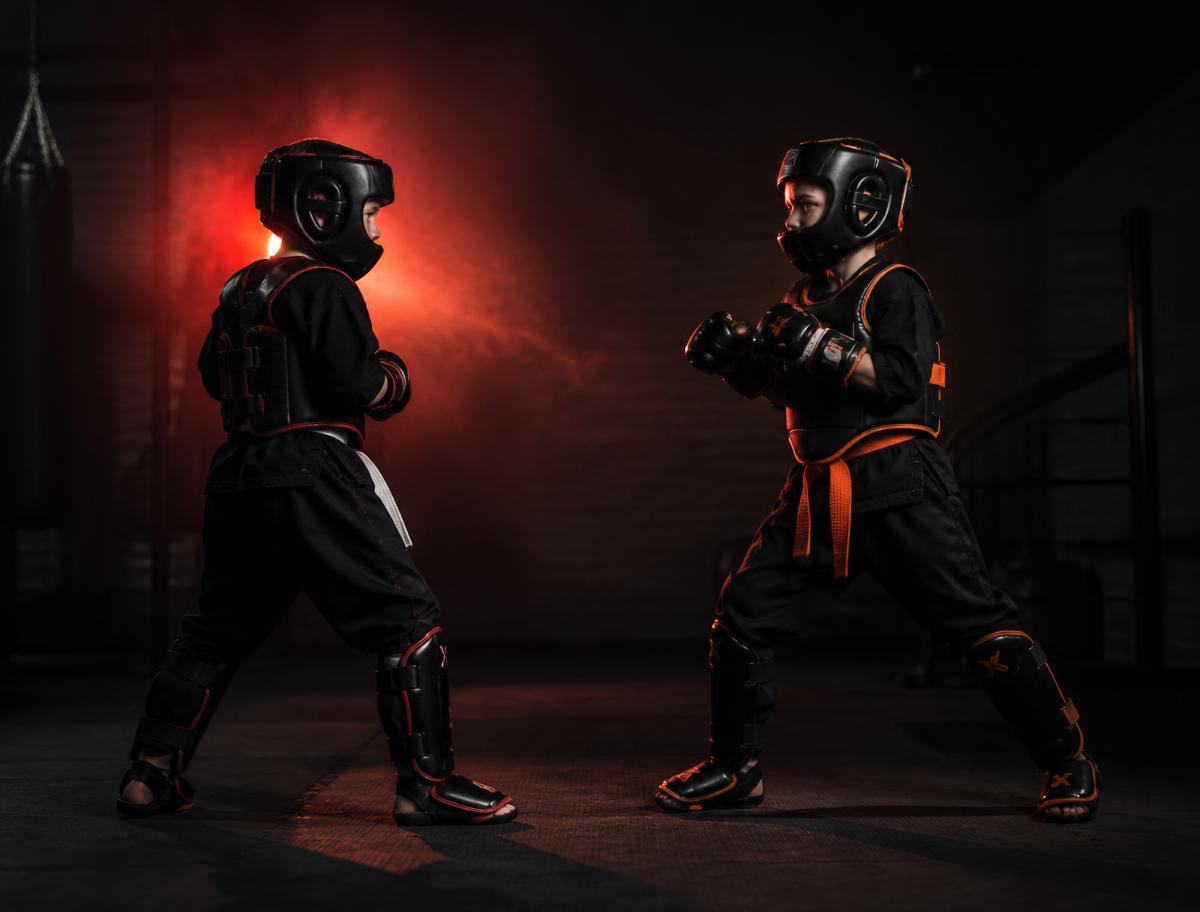
We match protective gear to the drill at hand — not everything at once and not always, but exactly what the partner work in that session requires.
Fill in the form or call us — we will find the right group and time for your child.